“This night and the coming day after this is dedicated to the feminine nature of the Divine. Durga, Laxmi and Saraswati are used as the symbols of these 3 dimensions of the femine.”
– Sadguru Jaggi Vasudev

“This night and the coming day after this is dedicated to the feminine nature of the Divine. Durga, Laxmi and Saraswati are used as the symbols of these 3 dimensions of the femine.”
– Sadguru Jaggi Vasudev
Posted in Historical / Scientific facts
A beautiful discourse on Concept of GOD by OSHO –
DOES GOD EXIST? HOW CAN THERE BE SO MUCH EVIL AND CORRUPTION IN THE WORLD
IF GOD EXISTS?
God is a mythical word, a mumbo-jumbo word that is the invention of the priesthood. Actually, to ask whether God exists is absurd. For those who know, God is existence, or existence is God.
Things exist, not God. A chair exists because a chair can go into nonexistence. To say that the chair exists is meaningful because its nonexistence is possible.
God is existence, the very isness. When we say God exists we create something out of the word God, then God becomes a thing. But God is not a thing, nor is God a person. That is why you cannot make him responsible for anything. Responsibility only comes when there is a personality, when there is someone who can be responsible.
God is not a person, he is pure existence. The word is misleading because the word personifies. It is better to use the word existence. The totality of existence is God.
So it cannot be asked whether God exists. That is like asking whether existence exists. Put this way – whether existence exists – the question becomes absurd. Obviously existence exists; there is no question about it. The question cannot even exist if there is no existence, nor can the questioner.
I would like to make it clear that when I say God, I mean existence as such. God is not a thing among other things, God is total thingness. To say that the table exists is the same as saying that the table is God. To say that you exist is the same as saying that you are God. God is the existence.
God is isness, the quality of isness, the quality of existence.
First of all, God is not a thing. Secondly, God is not a person because the total cannot be a person.
Personality is a relationship. Alone, totally alone, you will not be a person at all, you will be existence itself. That is why those who are seeking the divine tend to go into loneliness. In this way, they can cease to be persons and can become one with existence. Aloneness, absolute aloneness, is a step toward jumping into the abyss of existence.
God is not a person because there is nothing opposite to him, nothing distinct from him. God cannot say “I” because there is no other that exists as thou. He cannot be related to anyone. He is the whole, so all relationships exist in him and cannot exist beyond him.
So if God is not a person, there is no question of any responsibility. If evil exists, it exists. No one is responsible for it. The total cannot be responsible for it.
Responsibility implies that there is a person who can be responsible. A child of four cannot be taken to court because he is not yet a person and therefore cannot be held responsible for anything that he may have done. He is so innocent that even the sense of personality, the sense of ego, is not there. He is not responsible at all, because responsibility comes with ego. Existence has no ego at all – God has no ego at all – so you cannot make him responsible for any evil that exists.
But the human mind is very cunning. First we invent a personified God – we give God a personality – and then we make him responsible for what happens. We go on creating problems that are not problems at all but only linguistic fallacies. Ninety-nine percent of philosophy consists only of linguistic fallacies. If you call the totality, existence, you cannot make it responsible; but if you call it God, then you can make it responsible – only the word has changed.
Existence is nonpersonal, impersonal. But if God becomes a person, then you can ask, “Why is there evil?” The whole game is being played by you alone; God is not a party to it. When you give existence a name, a personal name, you create problems. These problems are not authentic problems; they are created problems, invented problems.
God means existence. I cannot say that God exists, because that would be a tautology. It would be just like saying: existence exists, or poetry is poetry. It means nothing, it defines nothing, it clarifies nothing, it explains nothing; it only repeats itself.
To me, God is existence, and existence is impersonal. It cannot be otherwise because the total cannot be a person. How can it be? In contrast to whom can it be an individual, a person? In contrast to whose ego can it create its own ego?
You become an ego because other egos exist. Psychologists say that the sense of ego develops in a child later than the sense of the other. First the child becomes aware of others, then he becomes aware of himself. The ego is a later addition.
You cannot become aware of yourself if there is no other. Without the other you cannot define yourself – your definition of yourself comes from the other. Others define you; they make you separate. By knowing others you come to feel your own boundaries. Then you know, “I am here, and I am not there.” Then you know, “This body is mine, and that body is not mine.” Then what is you is clearly defined – defined by other egos. If there were no other, you would never be aware of yourself as a person.
God cannot become an ego. He cannot say “I” because there is no thou: he cannot define himself.
God is indefinable because a definition means a drawing of boundaries, and the total has no boundaries at all. The total means that which has no boundaries, the infinite.
We cannot conceive of the infinite – whatsoever is conceivable by the mind is finite. Even when we think about the infinite we conceive of it as a greater finiteness, never as the infinite. We cannot conceive of a boundaryless existence, but it is so nevertheless. Whether you can conceive of it or not makes no difference.
Mind cannot conceive of the indefinable, because mind requires definitions, clearcut boundaries.
That is why God, existence, cannot be understood by the mind.
God is the indefinable. Because we use the pronoun he for a person, we use he for God. But “he”
is not correct, because by calling God he, he becomes a person. Still, there is no other way. If we call God it, it may seem better, but since we call things it, God also becomes a thing. Our language is not meant to express the indefinable, so the best we can do is use “he.” But he is not a person at all: he is a no-person, a non-ego. You cannot make him responsible.
If you say that something is bad – that there is evil or there is want – you are saying it to no one. No reply will be given to you from the universe, because as far as existence itself is concerned there is no evil. Evil depends on our attitudes; it depends on our moralistic definitions. For example, you may call someone ugly, but there is no ugliness in existence itself because there is no beauty. The distinction is human, it is not existential. You have made the definition: you have defined something as beauty and something else as ugliness. You have made the distinction and then you ask, “Why has God made ugliness?”
There is no way to decide what is good and what is bad. If there were no human beings on earth, would there be anything good or bad? There would be no good and no bad because goodness and badness are human distinctions, mental distinctions. If there were no human beings on earth would there be any flower that was ugly or any flower that was beautiful? There would only be flowers flowering; the distinction would not be there.
You say “this is evil” and “that is good.” But if, for example, Adolf Hitler’s mother had killed him during his childhood, would it have been good or bad? She would have been a criminal and they would have punished her for it. But now, looking back, we can say that it would have been a most moral act: by killing her child she could have saved the whole world.
No one can know the future. For us, every act is an incomplete act, every act is a fragment. We don’t know the whole so we cannot pronounce judgment on it.
It is just like a page torn from a novel – how can you make any judgment about the novel by reading just one page? You don’t know anything about the novel. This is just a fragment – it has no beginning or end. You will say, “I would like to read the whole story first. Nothing can be said about it otherwise.
This page is not enough.”
Words such as good and bad are just expedient, utilitarian; they are not existential. We cannot exist without classifying things as either good or bad because otherwise society would be impossible.
This must be clearly understood. Definitions are not ultimate truths, they are relative. There is not a single act that cannot be considered good in some context. A good deed can be bad in one context and a bad deed may be good in another. If you are to make any final judgment you will have to know everything from the very beginning to the very end – everything in the whole of existence. But of course, this is impossible.
All our statements about good and bad, beauty and ugliness, are nothing more than traffic regulations. We have to make them, but they are not ultimate truths. “Keep left” or “keep right”
– it makes no difference. But no society can do both: either you have to keep right or you have to keep left. The rule is utilitarian; it is neither natural nor ultimate.
The road is absolutely unconcerned with whether you keep to the right or to the left, but traffic does require certain rules. When there is less traffic you do not have to make any rules; but the more confusing the traffic, the more rules will be needed. In a village there is no need for traffic rules, but in a big city rules are needed.
As society develops in a more complex way, a more clearly defined morality is needed; otherwise you will not be able to live. But these moralities, these conceptions of good and bad, are human expediencies.
When you ask how there can be corruption if God exists, remember: God is not involved at all. There are reasons for corruption, but God is not responsible, the total is not responsible. If responsibility is to be put anywhere, it is to be put on us. We have created a society in which corruption has become necessary because its very base is corrupt.
Unless you change the very foundation of society there is bound to be corruption; there has always been corruption. Forms have changed, but the corruption has remained because we have not yet created a society in which corruption is impossible.
This situation is our creation; God is not involved in it at all. It is as much a human creation as this table, this sofa, this house. You cannot hold God responsible for this house, or for this room’s being small and not large, or for this window’s facing west and not east. You never ask God, “Why did you build this window onto the east wall and not the west?” That would be nonsense – you know that it is some person who built the window into the east wall. God has never been asked about it, he is not a party to it.
In the same way you can ask why there is corruption, but you cannot make any reference to God. To ask why there is corruption is a pertinent question. But to talk about God in reference to corruption is impertinent. Our society has been made by us – we are the architects of it. And because the foundation of it is wrong, because the base upon which we have built all of society’s structures is not scientific, it is bound to be corrupt. It is a human problem. We can change it or we can prolong it – it depends on us.
For example, our whole education is ambition-oriented. Our whole society is ambitious and an ambitious society can never be anything but corrupt. If you create ambition in everyone, not everyone will be able to fulfill it. You may say that anyone can be president, but only one person can be president at any one time. When you teach that everyone can be president, ambition is created: if everyone can be president then why shouldn’t you be? But since only one person can be president, a mad rush begins. Every means will be used – even evil means will be used.
Ambition corrupts, the ambitious mind is bound to be corrupt. Ambition is the seed of insanity. Yet our whole education is ambition-oriented. Your father says, “Become someone!” and the fever is created – you become diseased. Only one person can be president, and thousands of people who will be unsuccessful are aflame with the same ambition. Then you cannot be sane – you become insane. Because so much tension is created you become corrupt: you will use any means to achieve your goal.
It is infectious. If you see that someone else is using corrupt means you know that if you don’t use them you will be left behind. So you have to use equally corrupt means. Then someone else sees you being unscrupulous, so he has to be unscrupulous. It becomes a question of survival. Nothing else is possible within this framework, this structure. If you look to the very roots of society you will see that corruption is a natural outgrowth of our conditioning, our education, our cultivation.
The complexity of our social structure is such that those who succeed can hide their corruption.
Corruption is seen only when someone fails. If you succeed no one will know that you have been corrupt; success will hide everything. You have only to succeed and you will become a pinnacle of goodness – you will become everything that is good, pure, innocent. That means you can succeed in any way you like, but you must succeed. Once you succeed, once you are successful, nothing that you may have done is wrong.
This has been true throughout history. A person is only a thief if he is a small thief. If he is a great thief, then he becomes an Alexander the Great, a hero. No one ever sees that there is no qualitative difference between the two, that it is only a quantitative difference. No one will call Alexander the Great a great thief because the measure of your goodness is success: the more successful you are, the more good. Means are only questioned if you are a failure; then you will be called both corrupt and a fool.
If this is the attitude, how is it possible to create an uncorrupt society? To ask a person to be moral in this immoral situation is to ask something absurd. An individual cannot be moral in an immoral society. If he tries to be moral, his morality will only make him egoistic and ego is as immoral and corrupt as anything else.
This situation is a human creation. We have created a society with a mad rush for wealth, power, politics; we go on supporting it, and then we ask why there is corruption. Where there is ambition, corruption will be the logical consequence. You cannot check corruption unless the whole basic structure that encourages ambition is destroyed.
Ambition even becomes manifest around a so-called saint. He will incite you to ambition in terms of comparison; he will say, “Become better than others. Be good so that you will go to heaven and be the beloved of the divine while others will be tortured in the fires of hell.” The poison of ambition can easily be used in order to make a person good.
But that is not really possible. A person may be ambitious and bad – that is natural, logical – but he cannot be ambitious and good. It is impossible. If a person wants to be good, he cannot think in terms of comparison, because the flowering of real goodness only comes when there is no comparison.
Comparison is the barrier because comparison creates ego, it creates violence. The moment you say, “I am more humble than you,” you have become violent. You have used a subtle, cunning method that thrusts a knife into the other; you have killed him. The weapon is lethal – and much more subtle than political or capitalist weapons. If you say, “I am better than others, I am more saintly than others,” then the object may be different, but you will be on the same ambitious track. Criminals and sinners are not the only ones who are corrupt; the so-called good people, the “saints,” are also corrupt – in a more subtle way.
Our whole society is corrupt. It creates sinners with ambition and saints with ambition. And they are interdependent, because both exist on the same axis: the axis of ambition. A person who understands this will drop out of society completely. He will be neither a sinner nor a saint – he will not fit himself into any category – and you will be at a loss to measure who he is, what kind of a person he is. We need a society that is nonambitious.
God is not involved in it at all, but if you are ambitious, even God will become part of your ambition.
You will pursue him, you will try to attain to God.
A person who is ambitious is never able to attain to God. He is never relaxed, he is never loving – because ambition is violence. And a person who is not at ease, who is not loving, who is not silent or peaceful, can never know what God is. God is not something that can be known intellectually, he is something that can only be felt.
When you are at ease, totally relaxed, going nowhere – when the mind is still and at peace with itself – then you know what existence is. Then you know the beauty and the bliss of existence. It is not beauty in contrast to ugliness; there is no contrast and there is no comparison. Rather, everything becomes beautiful – the very existence is beautiful. Then a cactus is as beautiful as a rose. Then individuality is beautiful; it is incomparable.
Then for the first time you begin to love. It is not a love that exists in contrast to hate because that kind of love can never really be love, it is bound to be a diluted form of hate, a non-intense form of hate. It is the opposite pole: love exists at one pole and hate exists at the other pole, and you go on wavering between the two. Your hate means less love. Your love means less hate.
You may ask how one can be beyond hate and love. You can only be beyond the duality of love and hate if you are no longer ambitious, if you are no longer tense, if you are relaxed – going nowhere, seeking nothing at all, just being. Then you know God and, simultaneously, you know love. Love is a byproduct of being in tune with the infinite; it follows just like a shadow, it is a consequence.
Buddha never searched for love; love just came to him. Jesus never thought about love; he lived love. The search for love cannot be direct – it is such a subtle perfume that you cannot search for it directly. It comes as a byproduct of the realization that everything is one, a byproduct of comprehending that God exists in your enemy and in your friend.
The moment you become aware that you are not separate from existence, from all that is, that you are a part of it – and not a mechanical part but an organic part, just as a whale is organically joined to the ocean and is one with it all the time, just as my hand is organically one with me – then you can know love.
You can become aware of it only when you are nonambitious. Only a nonambitious mind is religious.
It makes no difference what your ambition is – whether it is wealth, power or fame, or even liberation or God – if you are ambitious, that means your mind is moving somewhere else, running after something else. It is always busy achieving, it is never just being that which it already is.
Ambition is tension, and tension is the barrier to encountering the divine. Once you encounter it, you are no more – the encounter cleanses you completely, the encounter devours you completely.
Only then is there love. The death of your ego is the birth of love.
Ordinarily, we think of love in contrast to hate. But those who know always think of love in contrast to ego. The real enemy of love is not hatred – the real enemy of love is ego. In fact, hatred and love as we know them are two aspects of the same coin.
Love comes when you are not, when the ego is not there. And the ego is not there, you are not, when you are not ambitious. A nonambitious moment is a moment of meditation. In a nonambitious moment, when you are seeking nothing, asking for nothing, praying for nothing; when you are totally satisfied with what you are, not comparing yourself with anybody else – in that moment you touch the deep reservoir of the divine. You are not just in contact with it, you are deeply in it: you are one with it.
Then love flows. Then you cannot do otherwise; you can only be loving. Then love is not the opposite of hate. There is neither love as we have known it nor hate as we have known it; both have ceased. Now quite a different quality of love, in a very new dimension, grows in you.
This love is a state of mind, not a relationship. It is not related to anybody; it is not that you love someone, rather, it is that you are loving. The other is not, the loved one is not, you are just loving to whatsoever comes in contact with you. You are love; you live in love. It has become your perfume.
Love is there, the perfume is there, even when you are alone – like a flower on a lonely path. No one passes, but the flower is there with its perfume. No one is there to know, to enjoy, but the perfume goes on silently spreading because it is not addressed to anyone. The perfume is there because that is the manifestation of the innermost nature of the flower. The flower is blissful, and the perfume is part of its nature. There is no effort to spread it – it is effortless.
When ego is not, love comes as a perfume – as a flowering of your heart. Then it goes on spreading.
It is addressed to no one, it is absolutely unaddressed. When love is not addressed, it becomes prayer. When it is addressed, it degenerates into sex; when it is unaddressed, it rises to prayer.
God or love or death are not problems to be solved – they are experiences to be passed through.
They are not questions that can be answered; they are quests that can either be realized or not.
God cannot be made a question at all. Whenever you ask questions about God they are bound to be superficial. And the answers are even more superficial, because a question that is superficial can only be answered with an even more superficial answer.
God is an existential quest; an inquiry, not a question. So there is no readymade answer to the question: Does God exist? Those who give readymade answers to the question do not know anything at all. It cannot be said that God exists and it cannot be said that God does not exist.
Both answers are irrelevant, because no answer can touch the real problem.
The theologies of every religion have become superficial because they have simply become expert in supplying readymade answers: you ask, and the answer is supplied. But this has done a very subtle harm to the religious spirit. These things cannot be answered like that. You cannot ask someone, “What is love?” You cannot ask it! And if he answers, then he is in the same boat as you – neither of you knows.
We want answers because we are trying to escape from the suffering entailed in the process of love, in the process that is life, existence, God. We are riding safe vessels: we want to know so that we will not suffer. But suffering is birth; through suffering there is ecstasy. You have to pass through the dark night of the soul to come to the dawn. You cannot ask what dawn is. You have to pass through the dark night to know it.
God is a search, not a question, and a search cannot be answered. It has to be lived; you have to go into it deeply. You will have to be committed to it; you will have to throw yourself into it. That is what the fear is: throwing oneself into the unknown, the uncharted.
You are afraid, so you sit on the bank and ask questions. And, of course, there are always people who get pleasure out of answering you. To answer someone is ego-fulfilling: you know and the other does not, the other is ignorant and you are a knower. Then this mutual nonsense goes on: someone asks and someone will answer. Both are in ignorance because the problem cannot be solved on the bank. One has to go into unknown waters, and you cannot go into the unknown with readymade answers.
Readymade answers are a barrier to the unknown. One has to go into the unknown in total insecurity, not knowing anything. That is what is necessary – and nothing can be done about it. To jump into the unknown is to come upon the truth, the ecstasy. When you come upon the divine yourself, it is not simply an answer, it is a transformation: you become one with it.
You can never become one with any answer; an answer always remains separate in the memory.
You can go on collecting answers and piling them up in the mind; then you know so many answers and yet the question remains the same – it is still not answered.
The question cannot be answered like that. It can only be answered through a mutation. When you encounter the divine directly, immediately – when the divine is before you and you are before the divine with no barrier in between – then you encounter the fire and you are transformed. Then you become one with the divine flame: you and the flame are not separate. Then you never ask, “What is God?” because you are not separate. Then you never answer the question, “What is God?”
because you are not separate.
Those who have known have remained silent. They have talked, but they have not given any answer to the question; they have made no statement at all. They have pointed in a certain direction, but to point is not to make a statement, it is just a gesture. Because of the limitation of words, of language – because of the limitations of the human mind, questioning and answering – one can only indicate, one can only point in a particular direction.
God is a living encounter, not a question. And through God, love comes. But one can only come to know God when one is not ambitious. Be nonambitious and you will know.
Do not define yourself by those who are behind, because no one is behind; or by those who are ahead, because no one is ahead. Do not compare yourself with anybody. You are alone. Only you are like you; no one else is like you. Just be what you are.
That doesn’t mean not to be active. Be active, but only because of yourself, not in comparison to others. Flower by yourself, not in comparison to others. With this attitude, when the mind is completely unmoving, something of the divine will lure you; you will have glimpses.
Once you know the bliss of such glimpses, you will know the nonsense, the absurdity, and the absolutely unnecessary misery of ambition. Then the mind stops by itself. It becomes completely still, silent, nonachieving. In this still moment, the jump comes. And after the jump, there is God.
After the jump, there is love – love follows like a shadow.
__________________________________________________________________________________________________________________
Kindly check the attached video where scientifically CSIR scientist Dr.N.Gopalakrishnan explains the differences between the Concept of GOD in Hinduism & the Abrahamic Faiths. A must watch for the God inquisitive people
Posted in Historical / Scientific facts
अपनी भारत की संस्कृति को पहचाने.ज्यादा से ज्यादा लोगो तक पहुचाये.
यही है हमारी संस्कृति की पहेचान.
************************
( ०१ ) दो पक्ष – कृष्ण पक्ष , शुक्ल पक्ष !
( ०२ ) तीन ऋण – देव ऋण , पितृ ऋण , ऋषि ऋण !
( ०३ ) चार युग – सतयुग , त्रेतायुग , द्वापरयुग , कलियुग !
( ०४ ) चार धाम – द्वारिका , बद्रीनाथ , जगन्नाथ पूरी , रामेश्वरम धाम !
( ०५ ) चारपीठ – शारदा पीठ ( द्वारिका ), ज्योतिष पीठ ( जोशीमठ बद्रिधाम ) , गोवर्धन पीठ ( जगन्नाथपुरी ) , श्रन्गेरिपीठ !
( ०६ ) चार वेद- ऋग्वेद , अथर्वेद , यजुर्वेद , सामवेद !
( ०७ ) चार आश्रम – ब्रह्मचर्य , गृहस्थ , वानप्रस्थ , संन्यास !
( ०८ ) चार अंतःकरण – मन , बुद्धि , चित्त , अहंकार !
( ०९ ) पञ्च गव्य – गाय का घी , दूध , दही , गोमूत्र , गोबर !
( १० ) पञ्च देव – गणेश , विष्णु , शिव , देवी , सूर्य !
( ११ ) पंच तत्त्व – पृथ्वी , जल , अग्नि , वायु , आकाश !
( १२ ) छह दर्शन – वैशेषिक , न्याय , सांख्य , योग , पूर्व मिसांसा , दक्षिण मिसांसा !
( १३ ) सप्त ऋषि – विश्वामित्र , जमदाग्नि , भरद्वाज , गौतम , अत्री , वशिष्ठ और कश्यप!
( १४ ) सप्त पूरी – अयोध्या पूरी , मथुरा पूरी , माया पूरी ( हरिद्वार ) , काशी , कांची ( शिन कांची – विष्णु कांची ) , अवंतिका और द्वारिका पूरी !
( १५ ) आठ योग – यम , नियम , आसन ,प्राणायाम , प्रत्याहार , धारणा , ध्यान एवं समाधी !
( १६ ) आठ लक्ष्मी – आग्घ , विद्या , सौभाग्य ,अमृत , काम , सत्य , भोग , एवं योग लक्ष्मी !
( १७ ) नव दुर्गा – शैल पुत्री , ब्रह्मचारिणी ,चंद्रघंटा , कुष्मांडा , स्कंदमाता , कात्यायिनी ,कालरात्रि , महागौरी एवं सिद्धिदात्री !
( १८ ) दस दिशाएं – पूर्व , पश्चिम , उत्तर , दक्षिण ,इशान , नेऋत्य , वायव्य , अग्नि आकाश एवं पाताल !
( १९ ) मुख्य १० अवतार – मत्स्य , कच्छप , वराह ,नरसिंह , वामन , परशुराम ,श्री राम , कृष्ण , बुद्ध , एवं कल्कि !
( २० ) बारह मास – चेत्र , वैशाख , ज्येष्ठ ,अषाढ , श्रावण , भाद्रपद , अश्विन , कार्तिक ,मार्गशीर्ष , पौष , माघ , फागुन !
( २१ ) बारह राशी – मेष , वृषभ , मिथुन ,कर्क , सिंह , कन्या , तुला , वृश्चिक , धनु , मकर , कुंभ , कन्या !
( २२ ) बारह ज्योतिर्लिंग – सोमनाथ , मल्लिकार्जुन ,महाकाल , ओमकारेश्वर , बैजनाथ , रामेश्वरम ,विश्वनाथ , त्र्यंबकेश्वर , केदारनाथ , घुष्नेश्वर ,भीमाशंकर ,नागेश्वर !
( २३ ) पंद्रह तिथियाँ – प्रतिपदा ,द्वितीय , तृतीय , चतुर्थी , पंचमी , षष्ठी , सप्तमी , अष्टमी , नवमी ,दशमी , एकादशी , द्वादशी , त्रयोदशी , चतुर्दशी , पूर्णिमा , अमावष्या !
( २४ ) स्मृतियां – मनु , विष्णु , अत्री , हारीत , याज्ञवल्क्य , उशना , अंगीरा , यम , आपस्तम्ब , सर्वत ,कात्यायन , ब्रहस्पति , पराशर , व्यास , शांख्य , लिखित , दक्ष , शातातप , वशिष्ठ !
***********************
ॐ आओ सभी भारतीय भाई बहन मिलके नया स्वच्छ भारत बनाये
ॐ शाति ।।
जय हिन्दी ।। जय संस्कृत ।।
जय भारत ।। वंदे मातरम् ।।
Posted in Historical / Scientific facts
Indian History as we know is one of the most perverted & polluted history in the World. The British Colonialists on purpose manipulated distorted changed our glorious history to their selfish colonial political & religious motives.
One of such landmark errors in the History of INDIA is the ARYAN INVASION THEORY. Our pseudo secular Marxist historians / Academicians have continued this injustice to our history to please their political masters who themselves are the followers of Nehruvian Secularism.
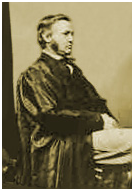
Aryan Invasion theory was proposed by Max Mueller the German Linguist & Sanskrit scholar in 1853 who introduced the word ARYA in English language as referring to a particular race and language. He did this in order to give credibility to his ARYAN race theory. However in 1888 when challenged by other eminent scholars and historians, Mueller could see that his reputation was in jeopardy and made the following statement thus refuting his own theory – “I have declared again and again that if I say Aryas, I mean neither blood nor bones, nor hair, nor skull; I mean simply those who speak an Aryan Language.. to me an ethnologist who speaks of Aryan race, Aryan blood, Aryan eyes and hair, is as great a sinner as a linguist who speaks of a dolichocephalic dictionary or a brachycephalic grammar.” (Max Mueller, Biographies of Words and the Home of the ARYAS, 1888 pg 120)
But the die had already been cast & Political & Nationalist groups in Germany and France exploited this racial phenomenon to propagate the supremacy of an assumed Aryan race of White People. Later Adolf Hitler used this ideology to the extreme for his Political hegemony and his barbaric crusade against Jews, Slavs and other racial minorities, culminating HOLOCAUST of millions of innocent people.
 According to this theory, India was invaded and conquered by nomadic light-skinned Indo-European tribes (Aryans) from Central Asia (Caspian Sea) around 2500-1500 BC. They overran an earlier and more advanced dark-skinned Dravidian civilization from which they took most of what later became Indian civilization. In the process they never gave the indigenous people whom they took their civilization from the proper credit but eradicated all evidence of their conquest. All the Aryans really added of their own was their language (Sanskrit, of an Indo-European type) and their priestly cult of caste that was to become the bane of later Indic society.
The so-called Aryans, the original people behind the Vedas, the oldest scriptures of Hinduism, were reinterpreted by this modern theory not as sages and seers – the rishis and yogis of Hindu historical tradition – but as primitive plunderers. Naturally this cast a shadow on the Hindu religion and culture as a whole. The so-called pre-Aryan or Dravidian civilization is said to be indicated by the large urban ruins of what has been called the “Indus Valley culture” (as most of its initial sites were on the Indus river), or “Harappa and Mohenjodaro,” after its two initially largest sites.
The Social & Political implications of the Aryan Invasion Theory was
1.It served to divide India into a northern Aryan and southern Dravidian culture which were made hostile to each other. This kept the Hindus divided and is still a source of social tension.
2.It gave the British an excuse in their conquest of India. They could claim to be doing only what the Aryan ancestors of the Hindus had previously done millennia ago.
3.It served to make Vedic culture later than and possibly derived from Middle Eastern cultures. With the proximity and relationship of the latter with the Bible and Christianity, this kept the Hindu religion as a sidelight to the development of religion and civilization to the West.
4.It allowed the sciences of India to be given a Greek basis, as any Vedic basis was largely disqualified by the primitive nature of the Vedic culture.
5.This discredited not only the ‘Vedas’ but the genealogies of the ‘Puranas’ and their long list of the kings before the Buddha or Krishna or Rama and were left without any historical basis. The Mahabharata, instead of a civil war in which all the main kings of India participated as it is described, became a local skirmish among petty princes that was later exaggerated by poets. In short, it discredited the most of the Hindu tradition and almost all its ancient literature. It turned its scriptures and sages into fantasies and exaggerations.
6.This served a social, political and economical purpose of domination, proving the superiority of Western culture and religion. It made the Hindus feel that their culture was not the great thing that their sages and ancestors had said it was. It made Hindus feel ashamed of their culture – that its basis was neither historical nor scientific. It made them feel that the main line of civilization was developed first in the Middle East and then in Europe and that the culture of India was peripheral and secondary to the real development of world culture.
Such a view is not good scholarship or archeology but merely cultural imperialism. The Western Vedic scholars did in the intellectual sphere what the British army did in the political realm – discredit, divide and conquer the Hindus.
However recent research done on the same has exclusively FLAWED the Aryan Invasion theory
1.Ancient river Saraswati – This is a death blow to the Aryan Invasion theory. According to the Aryan Invasion theory the aryans who invaded India in around 1500 BC settled on the banks of Indus or Sindhu river in North India.
The vedic texts talk about Ganga Yamuna Saraswati as the trio river , the three great rivers of their age. Ganga and Yamuna rivers exist even today in North India and till sometime back Saraswati was thought to be a mythological river. But vedas talk about Saraswati as a mighty river that flowed in the north India during the vedic ages!
There is also the mention of the Ganga Yamuna Saraswati merging at a place called Prayag , which was also called the Triveni Sangam (the current Allahabad in North India where today only Ganga and Yamuna meet). It is said that the Saraswati that merged here with the other two rivers was a subterranean channel of the main river of Saraswati.
The Mahabharatha talks about Saraswati river saying that it dried up in a desert! So it has to be noted here that Mahabharatha can be dated back to the drying up of the Saraswati river!
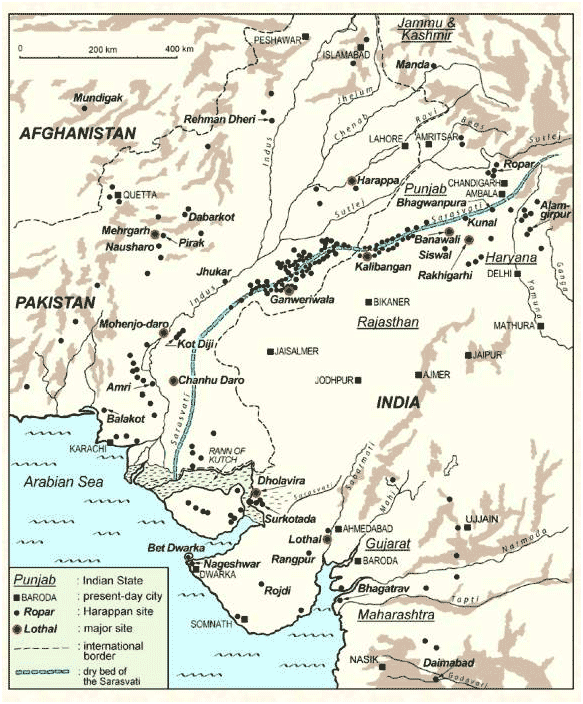 Recent satellite images and geological excavations have proved the existence of a ancient river in North India, with exactly the same features of river Saraswati described in the vedas and Mahabharatha! Today Saraswati is a dried up river today. Before Saraswati dried up, the present Rajasthan was a lush green area! The drying up of Saraswati created the Thar desert in Rajasthan. Even the current dry beds of Sindh and Baluchistan (currently in Pakistan) were lush green fertile lands before the Saraswati river dried up!
2. Latest research in Genetics & Molecular biology has conclusively proved that their has been no influx of foreign DNA in the past 60000 years. “We have conclusively proved that there never existed any Aryans or Dravidians in the Indian sub continent. The Aryan-Dravidian classification was nothing but a misinformation campaign carried out by people with vested interests,” Prof Lalji Singh, vice-chancellor, Banaras Hindu University
The findings of a three-year research by a team of scientists, including Prof Singh and others from various countries, has been published by American Journal of Human Genetics in its issue dated December 9.
“The study effectively puts to rest the argument that south Indians are Dravidians and were driven to the peninsula by Aryans who invaded North India,” said Prof Singh, a molecular biologist and former chief of Centre for Cellular and Molecular Biology, Hyderabad.
According to Dr Gyaneshwer Chaubey, Estonian Biocentre, Tartu, Estonia, who was another Indian member of the team, the leaders of Dravidian political parties may have to find another answer for their raison d’être. “We have proved that people all over India have common genetic traits and origin. All Indians have the same DNA structure. No foreign genes or DNA has entered the Indian mainstream in the last 60,000 years,” Dr Chaubey said.
Dr Chaubey had proved in 2009 itself that the Aryan invasion theory is bunkum. “That was based on low resolution genetic markers. This time we have used autosomes, which means all major 23 chromosomes, for our studies. The decoding of human genome and other advances in this area help us in unraveling the ancestry in 60,000 years,” he explained.
According to Prof Singh, Dr Chaubey, and Dr Kumarasamy Thangaraj, another member of the team, the findings disprove the caste theory prevailing in India. Interestingly, the team found that instead of Aryan invasion, it was Indians who moved from the subcontinent to Europe. “That’s the reason behind the findings of the same genetic traits in Eurasiain regions,” said Dr Thangaraj, senior scientist, CCMB.
“Africans came to India through Central Asia during 80,000 to 60,000 BCE and they moved to Europe sometime around 30,000 BCE. The Indian Vedic literature and the epics are all silent about the Aryan-Dravidian conflict,” said Dr S Kalyanaraman, a proponent of the Saraswathi civilization which developed along the banks of the now defunct River Saraswathi.
3. Also modern research done by Dr. D K Hari on Archae Astronomy using the PLANETARIUM SOFTWARE developed by NASA has revealed the dates of RAMAYANA & MAHABHARATA the great epics which are unjustly called mythology by these Marxist historians.
For instance the Birth of RAMA has been dated on 10th Jan 5114 BC while that of Krishna has been on 27Th July 3112 BC.
The western historians cannot possibly conceive the history of mankind beyond 2500 BC as most of the Europe was uninhabited before 2500 BC
For further details pls check the website www.bharathgyan.com
SO INSHORT we can say conclusively that the Indus Valley Civilisation was never invaded & it ended up after the drying up of Saraswati River bed around 3500 BC and hence the residents migrated towards Europe & Central Asia in search for greener pastures. Hence the so called whites have certain common Indian genetic traits. Also now it has been proved that Sanskrit is the mother of all the Indo European group of languages.
___________________________________________________________________________________________________________________
Also please check the video by Dr P Priyadarshi a Physician & Cardiologist about the evolution of mankind and the History of India in the past 100,000 years based on the DNA studies which he spoke in a seminar conducted at IIT Kanpur on 25th & 26th September 2012. This presentation finally & conclusively nails the Aryan Invasion Theory.
Posted in Historical / Scientific facts
In sanskrit 33 KOTIS was misinterpreted as 33 Crores but actually 33 KOTIS meant 33 TYPES. SO in short Hindus/Sanatanis worshipped 33 Types of Devtas (Celestial/divine beings)
The details of them are as follows
Of these 31 forces
– Eleven Rudras are forces/factors that operate the world of Physics
– Twelve Adityas are forces/factors that operate the world of Chemistry and
– Eight Vasus are the forces/factors that operate the world of Biology.
The twelve diff Adityas corresponds to twelve diff months are as follows.
Ansh (Due Share)
Aryaman (Nobility)
Bhaag (Due inheritance)
Dhatri / Daksha (ritual skill)
Tvashtra (crafting skill)
Mitra (friendship)
Pushan (Prosperity)
Savitra/Parjanya (power of word)
Vivasan/Surya (social law)
Varun (fate)
Vaman (cosmic law)
Shakra
The diff eight VASUS are as follows
Prithvi – Earth
Jal – Water
Agni – Fire
Vayu – Air
Aakash – Ether
Soma – Moon
Surya – Sun
Naskhatra – Stars
The diff eleven type of Rudras include
Pran
Apaan
Samaan
Vyaan
Udaan
Naag
Kurma
Krikaal
Devdutta
Dhanajaya
AATMA
Thus totaling – 31
The balance two Devtas include
Indra – Also called the king of the DEVTAS
Prajapati – Also called the creator DEVTA responsible for creation
These DEVTAS or evolved beings or Celestial beings effects our physical mental spiritual psychological health in every possible way & hence they were respected & worshipped in the Vedic times. These worship is important for the Sansari people (worldly people) for the fulfilment of the two Purusharthas i.e. Artha & Kaama out of the four Purusharthas of Dharma Artha Kaama Moksha.
However on the advancement of a seeker to Spritual Plane or on the path to Enlightment, the worship of these Gods may not be necessary as the ultimate aim of liberation is achieved.
Posted in Historical / Scientific facts